2025-1-TR01-KA210-ADU-000356031
Project Summary
The Language Learning and Cultural Integration Support Project for Migrants and Refugees is an Erasmus+ small-scale partnership in adult education that aims to support the social inclusion and integration of migrants and refugees across Europe.
The project addresses one of the main challenges faced by migrants: limited language skills and difficulties in adapting to a new cultural and social environment. By improving language proficiency and promoting intercultural dialogue, the project seeks to enhance access to education, employment, and public services.
Through international cooperation between partner organizations from Türkiye, Italy, Greece, and Portugal, the project will develop and share innovative educational practices, training materials, and digital tools to support migrants’ integration.
Key objectives of the project include:
- Improving language skills of migrants and refugees
- Supporting their social and cultural integration
- Promoting inclusion, diversity, and equal opportunities
- Strengthening intercultural understanding and dialogue
- Enhancing employability and participation in society
The project will implement a series of activities such as language courses, social cohesion training, cultural events, and digital learning initiatives. It will also establish a Migration Advisory Unit to provide guidance and support to newly arrived migrants.
By fostering collaboration between educators, institutions, and communities, the project aims to create sustainable solutions that benefit not only migrants and refugees but also the wider society, promoting a more inclusive and cohesive Europe.
1st LTTA – E-learning E-life
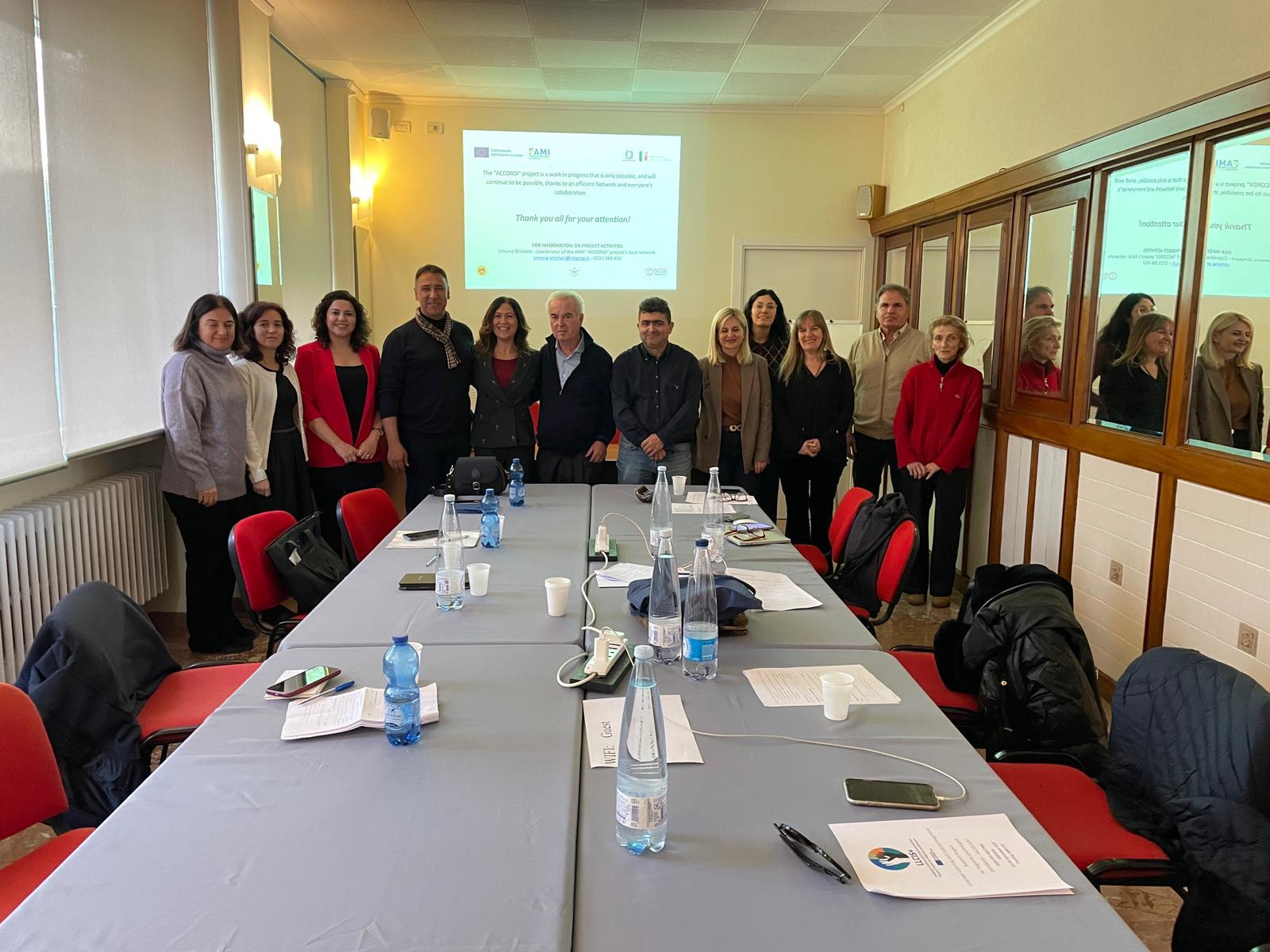
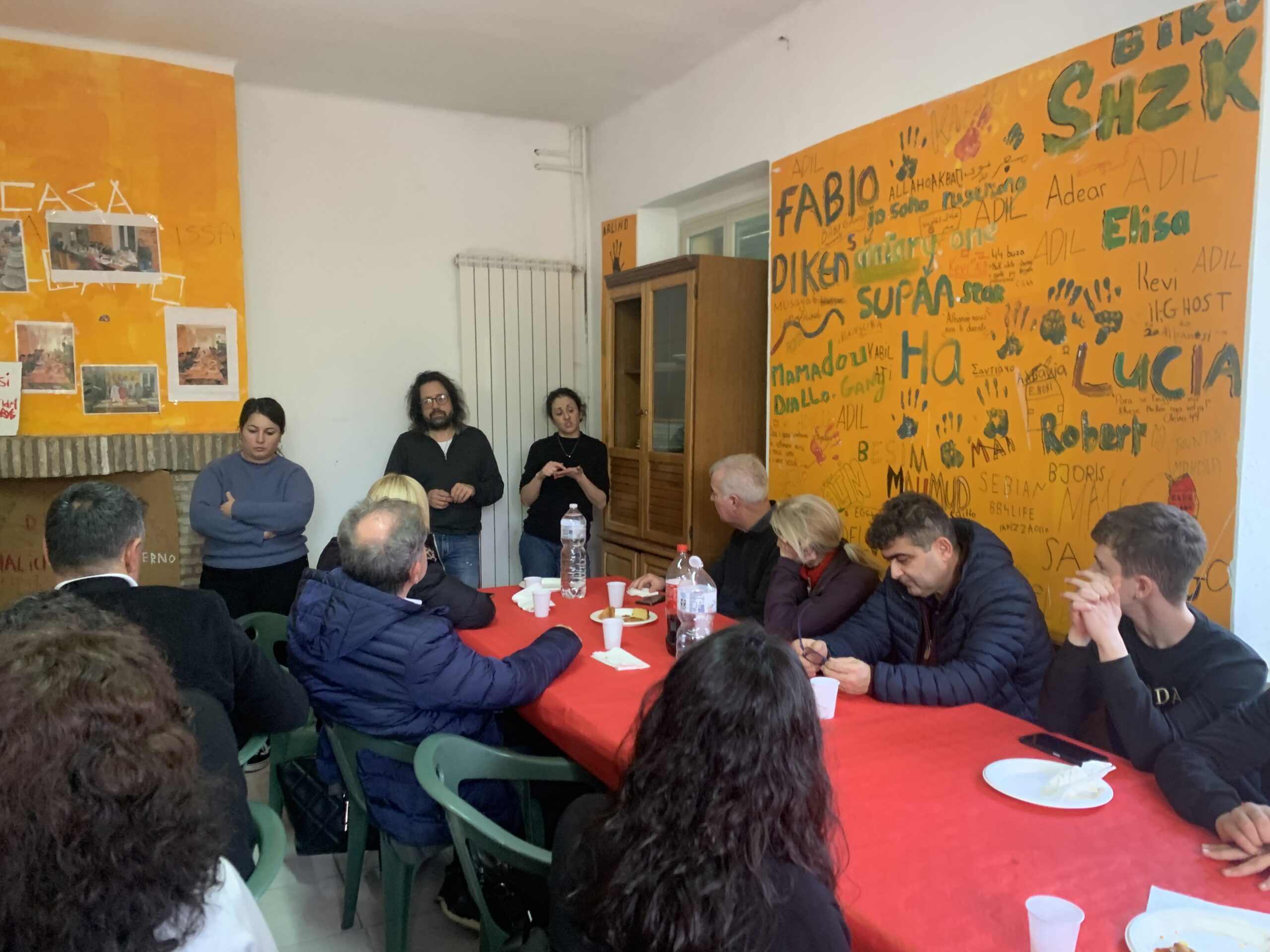
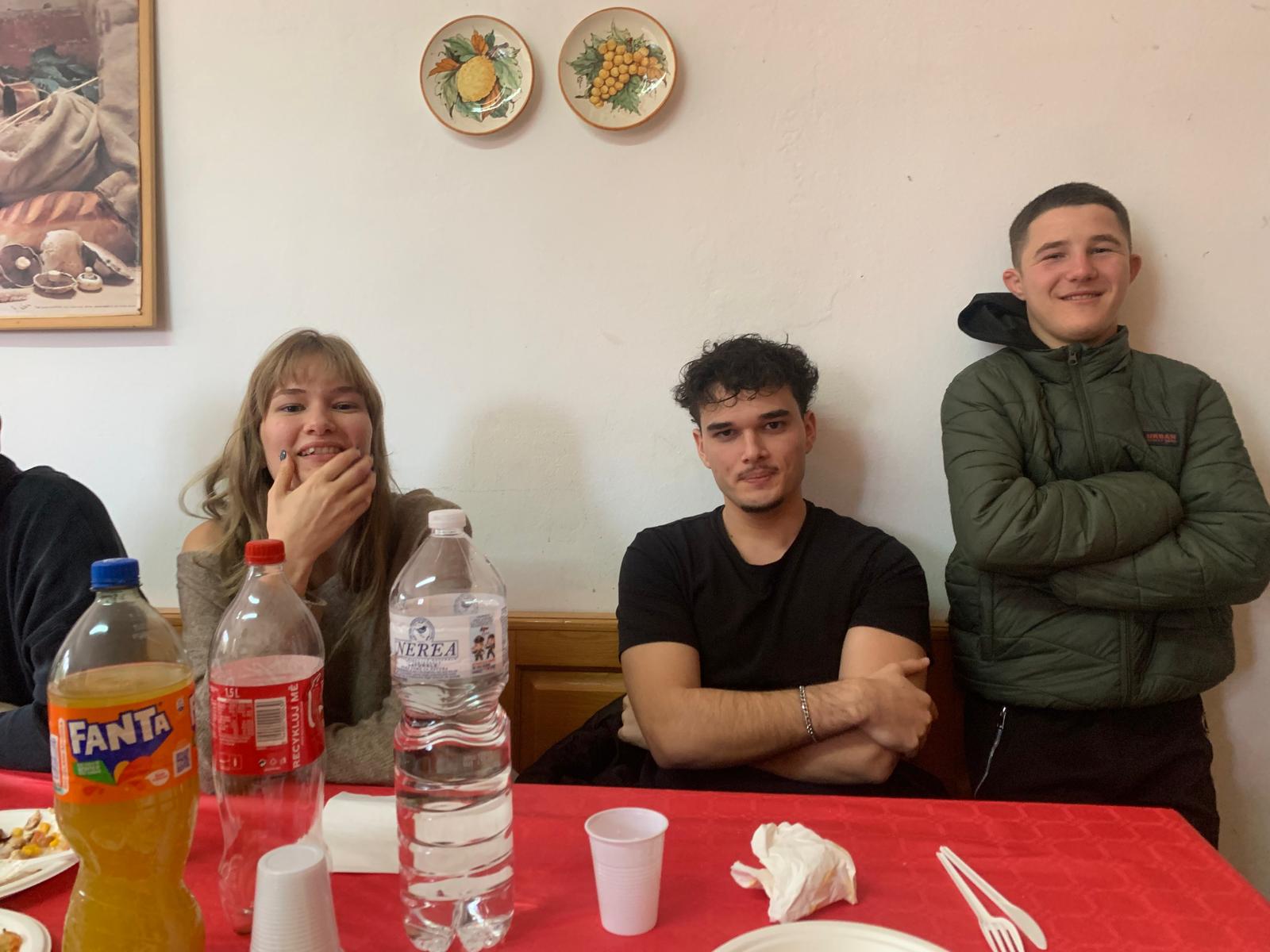
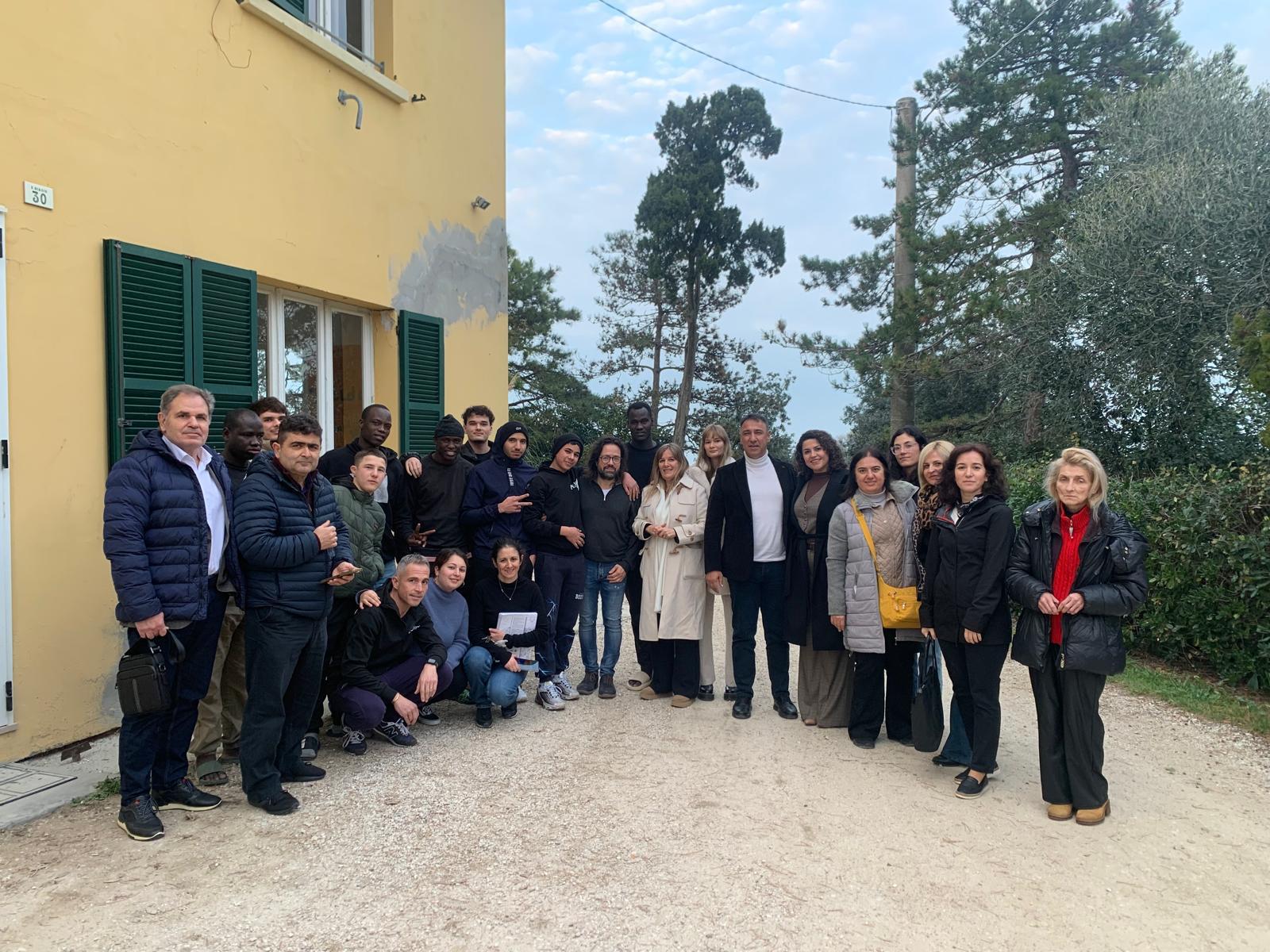
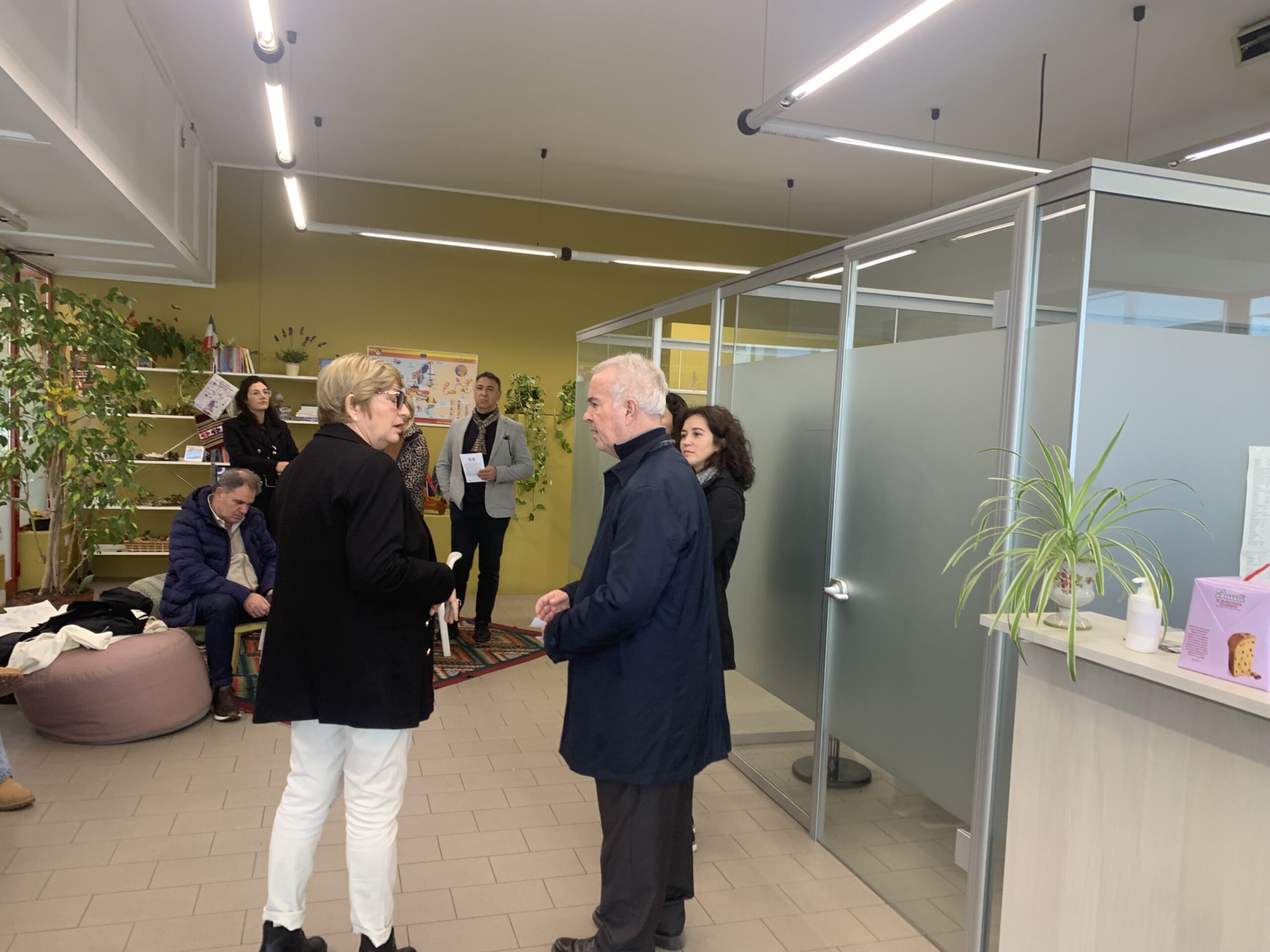
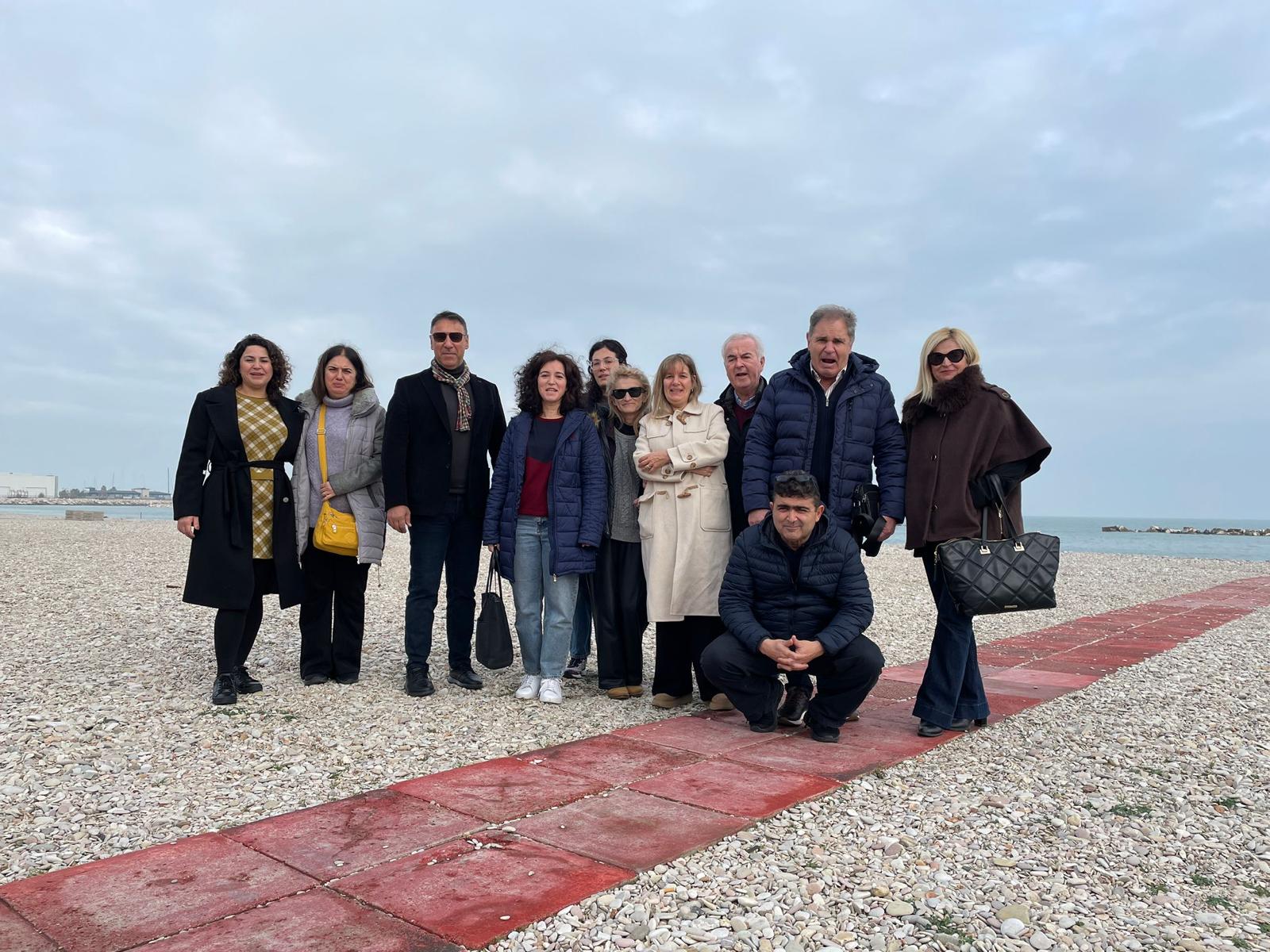
The first Learning, Teaching and Training Activity (LTTA), titled “E-learning E-life”, took place in Italy and brought together educators from all partner organisations involved in the project.
This initial activity played a key role in laying the foundations of the project, allowing participants to get to know each other, establish effective cooperation, and define the project’s working structure. During the four-day mobility, trainers explored innovative and eco-friendly e-learning platforms and digital tools that can support the education and integration of migrants and refugees.
The activity included presentations on migration realities in different countries, discussions on the challenges faced by migrants and refugees, and workshops focused on the development of digital learning materials. Participants also worked collaboratively to design educational content and share good practices in adult education.
A key outcome of this LTTA was the introduction of the concept of a Migration Advisory Unit, aimed at providing guidance and support to migrants in areas such as education, employment, and social integration.
By the end of the activity, participants had strengthened their digital and pedagogical skills, increased their awareness of migrant integration challenges, and enhanced their ability to create inclusive and innovative learning environments. The LTTA also promoted intercultural exchange, cooperation, and mutual understanding among partner countries.
2nd LTTA – Greece
Content coming soon.
3rd LTTA – Guimarães, Portugal
15–18 September 2026
This four-day LTTA focuses on digital tools, artificial intelligence, language learning and social inclusion, with practical activities designed to support the integration of migrants and refugees.
Day 1 – 15 SEPTEMBER 2026
09:30 – Welcome, organisational matters and agreeing on the agenda
09:45 – Presentation of each partner’s project work
11:15 – Coffee Break
11:30 – Training on the use of digital tools in education and their application to new learning methodologies
Materials:
Product 1 – Trainer Guide: Digital Tools and New Learning Methodologies for Inclusive Adult Education with Migrants and Refugees
Product 2 – Presentation: Digital Tools for Inclusive Adult Education
Product 3 – Worksheet: Design an Inclusive Digital Learning Activity
Product 4 – Completed Example: How to Book a Medical Appointment
13:00 – Lunch
14:30 – Visit to courses taken by migrant student
14:30 – Preparation of a report by the Quality Control Team
Materials:
Working Document – JEAD Contribution to the Quality Control Report
18:00 – End of the day – visit the city
20:00 – Dinner
Day 2 – 16 SEPTEMBER 2026
09:30 – Digital literacy workshop
Materials:
Product 1 – Presentation: Digital Literacy Workshop
Product 2 – Worksheet: Digital Survival Skills
Product 2A – Fillable Worksheet: Digital Survival Skills
Product 2B – Completed Example: Digital Survival Skills
Product 3 – My Digital Toolbox / PLE
Additional Material – Digital Survival Skills for Job Interviews
13:00 – Lunch Break
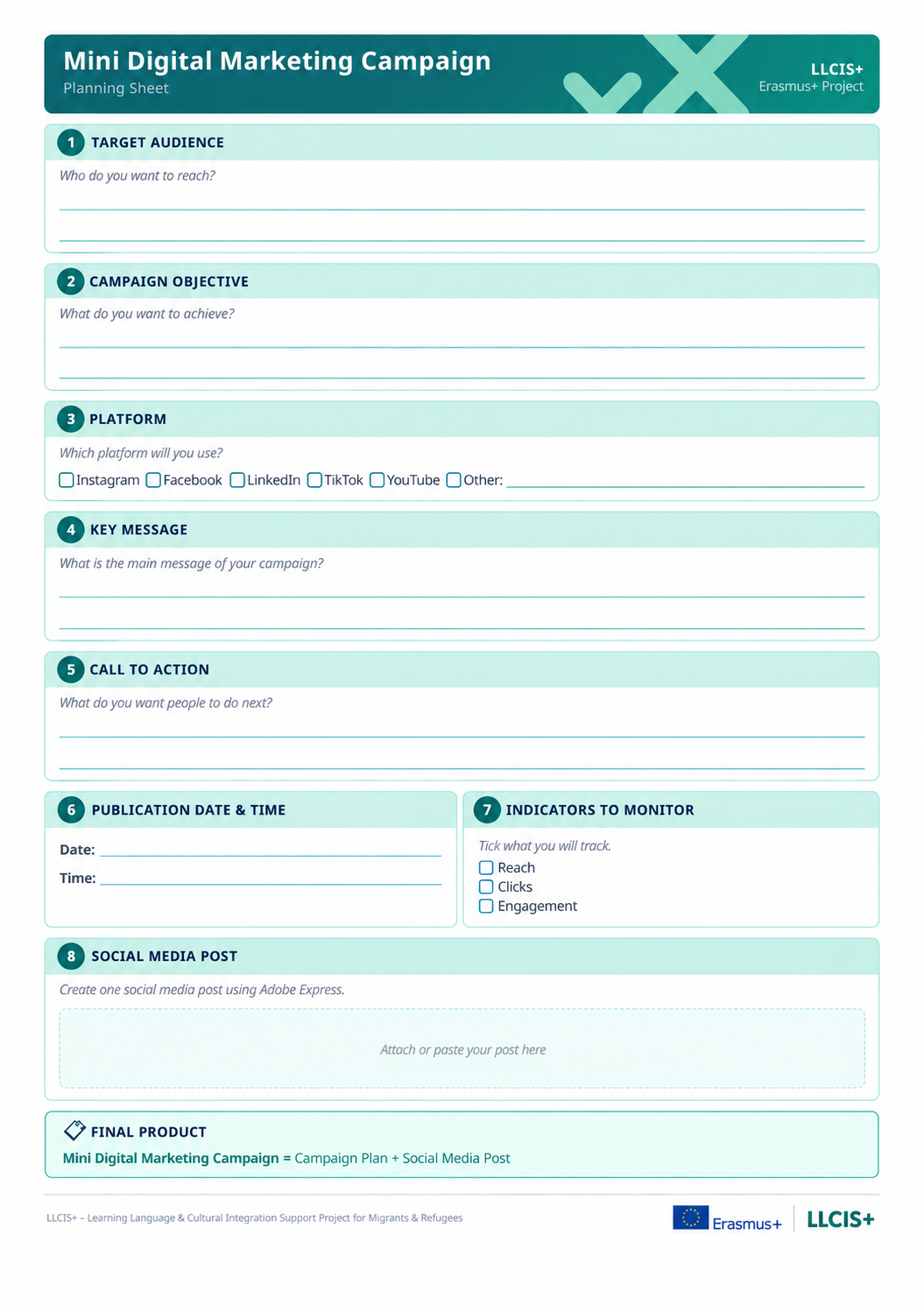
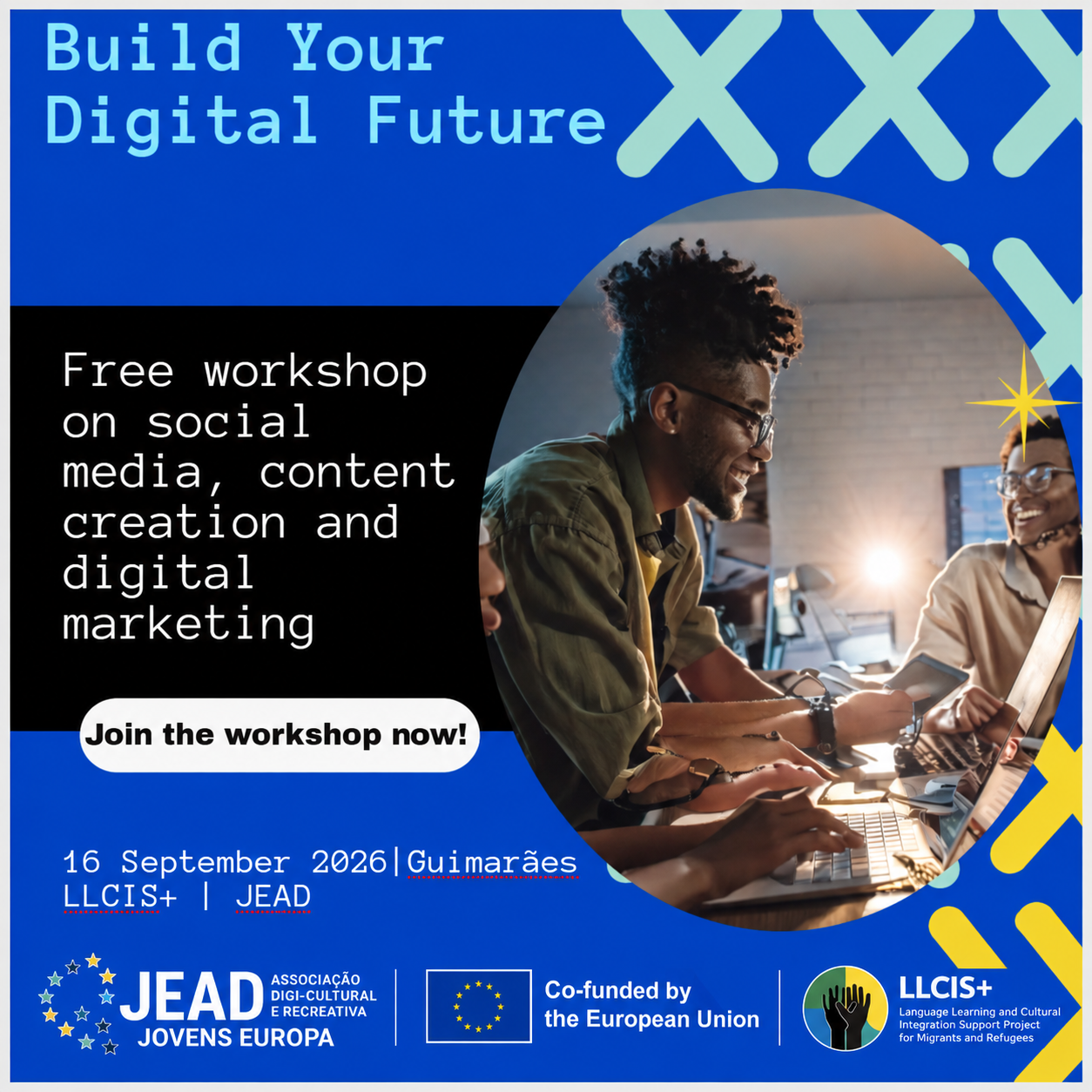
14:30 – Training on effective use of social media platforms, content creation and digital marketing strategies
Materials:
Product 1 – Presentation: Build a Digital Marketing Campaign from Scratch
Product 2 – Planning Sheet: Mini Digital Marketing Campaign
Product 2A – Fillable Planning Sheet: Mini Digital Marketing Campaign
Product 2B – Completed Example: Mini Digital Marketing Campaign
Product 3 – Example Social Media Post: Build Your Digital Future
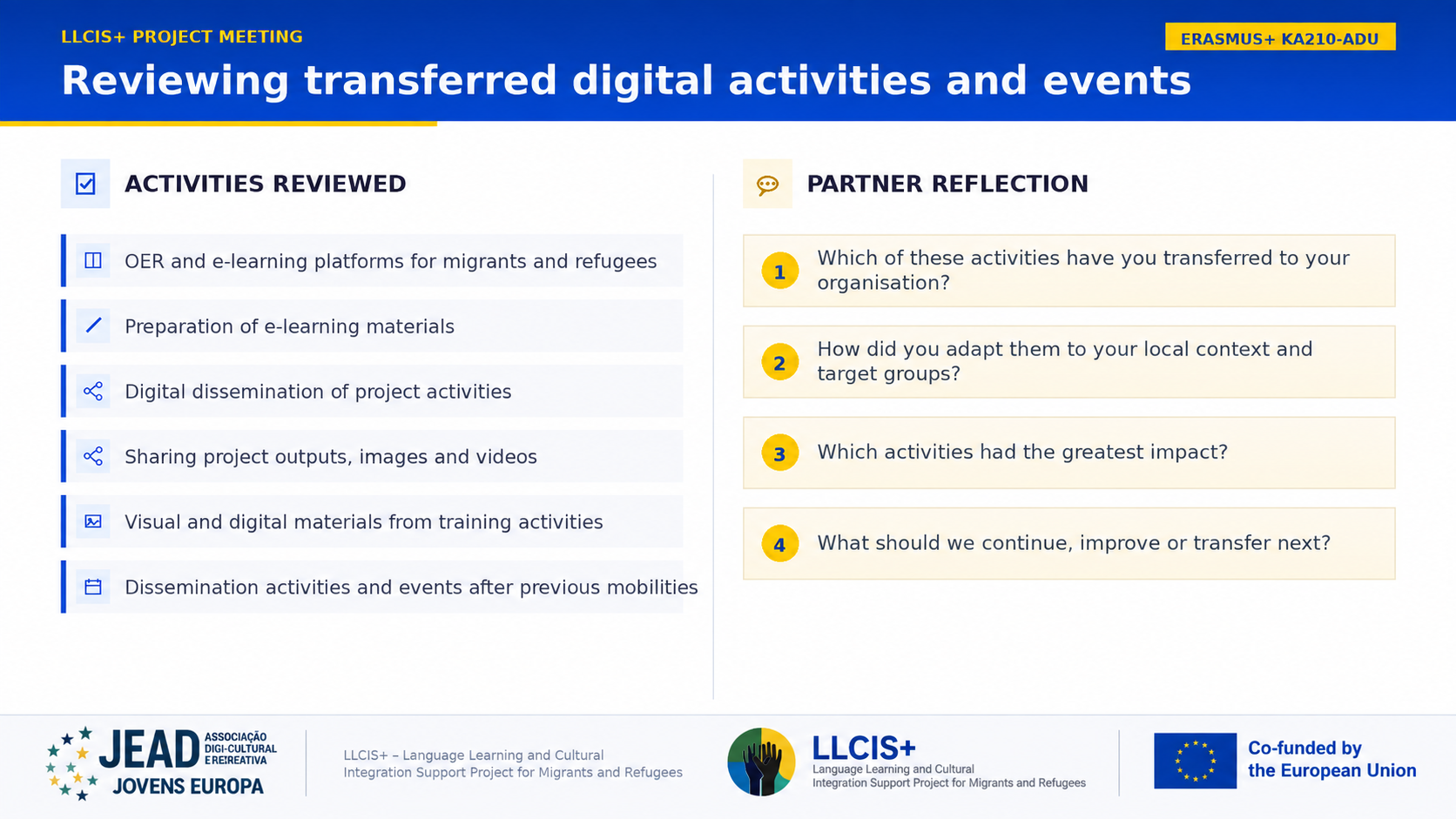
14:30 – Reviewing the transferred digital activities and events
Materials:
Product 1 – Reflection Presentation: Reviewing Transferred Digital Activities and Events
18:00 – End of the day
20:00 – Dinner
Day 3 – 17 SEPTEMBER 2026
09:30 – Training on the use of Artificial Intelligence
Materials:
Product 1 – Presentation: Artificial Intelligence for Language Learning & Social Integration
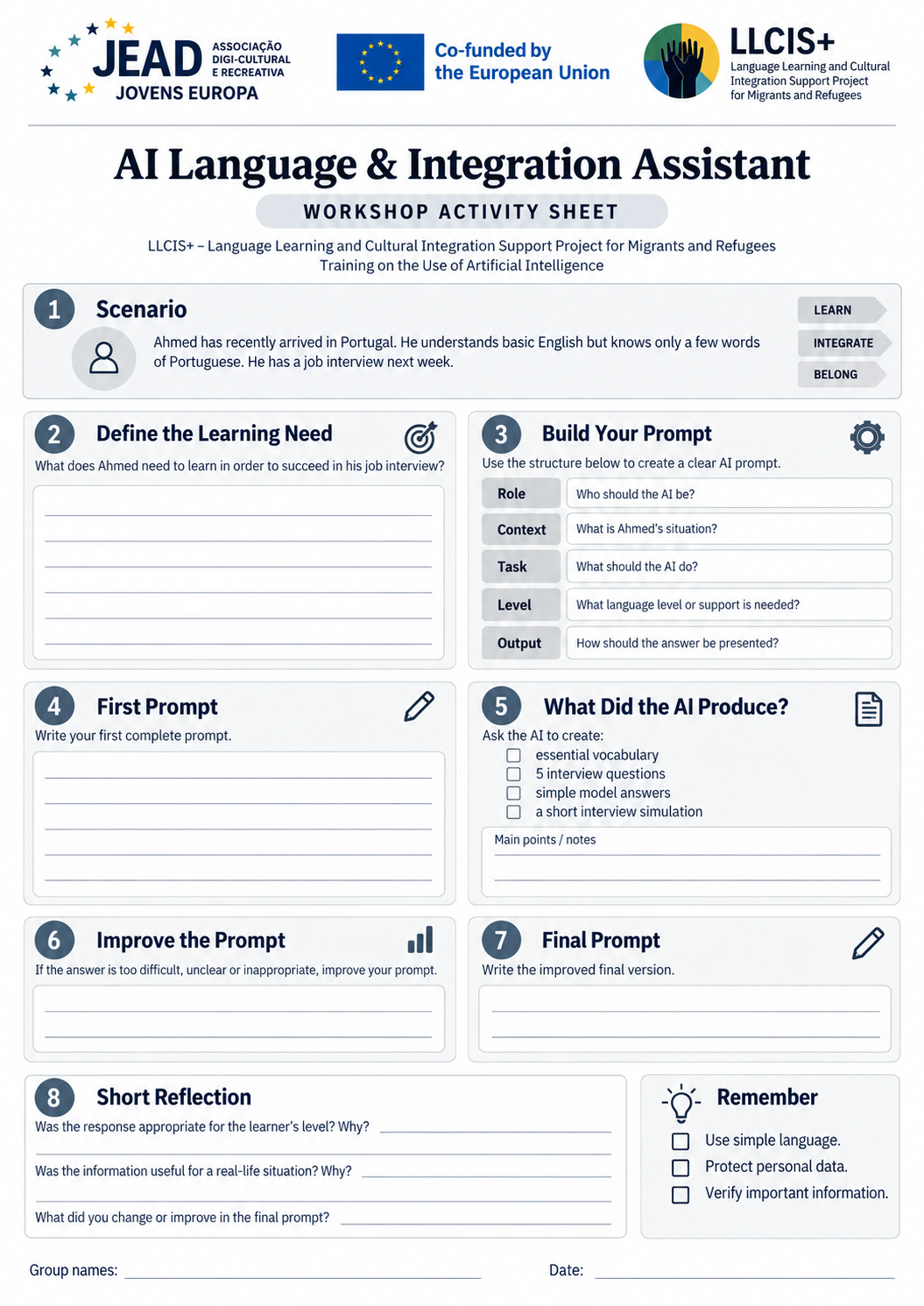
Product 2 – Workshop Activity Sheet: AI Language & Integration Assistant
Product 2A – Fillable Workshop Activity Sheet: AI Language & Integration Assistant
Product 2B – Completed Example: AI Language & Integration Assistant
09:30 – Sharing opinions about the short film to be prepared for the final activity
Materials:
Product 1 – Discussion Guide: Sharing Opinions about the Short Film
12:30 – Lunch Break
14:30 – Workshop on AI applications used in short film
Materials:
Product 1 – Presentation: AI-Supported Short Film Creation
Product 2 – Demonstration Video: A New Beginning
Product 3 – Guided Editable Worksheet: AI-Supported Short Film Creation
14:30 – Meeting with / visit to migrants and refugees who have set up a business and are starting a new life
Materials:
Product 1 – Interview & Reflection Guide: Meeting/Visit with Migrants or Refugees Who Created a Business
20:00 – Dinner
Day 4 – 18 SEPTEMBER 2026
09:30 – Seminar on artificial intelligence and other digital technologies to improve learning, evaluation and student support
Materials:
Product 1 – Presentation: AI and Other Digital Technologies to Improve Learning, Evaluation and Student Support
11:00 – Coffee Break
11:30 – Training on programming activities using AI for personalized learning, digital tools for teaching, and curriculum adaptation
Materials:
Product 1 – Activity Design Template: Design an AI-Supported Learning Activity for Migrants and Refugees
Product 2 – Example Activity: AI-Supported Job Interview Practice
Product 3 – Guided Worksheet: AI-Supported Learning Activity Canvas
12:00 – Implementation of a visit expectation Form by the host organisation
Form: Complete the LTT3 Evaluation Questionnaire
12:30 – Lunch Break
14:30 – Planning next meeting activities
– Cultural and social activity
17:00 – Certificate ceremony
20:00 – Dinner
4th LTTA – Kuçadasi, Turkiye
sxnbs